Wabi-sabi AI prompts: the beauty of imperfect things
Cracked tea bowls mended with gold, moss on old stone, plaster walls in late light. Twelve prompts that keep the rough, quiet, unfinished feel AI models usually polish away.
ImageText-to-imageEN + 中文
Quick answer
Wabi-sabi (侘寂) is a Japanese way of seeing beauty in things that are imperfect, impermanent and incomplete. Wabi is the quiet richness of a simple, rustic life; sabi is the beauty that comes with age: rust, patina, wear, faded colour. It grew out of Zen Buddhism and the 16th-century tea ceremony, where tea master Sen no Rikyū preferred rough, local, handmade bowls to perfect imported porcelain.
Wabi-sabi (侘寂) is a Japanese way of seeing beauty in things that are imperfect, impermanent and incomplete. Wabi is the quiet richness of a simple, rustic life; sabi is the beauty that comes with age: rust, patina, wear, faded colour. It grew out of Zen Buddhism and the 16th-century tea ceremony, where tea master Sen no Rikyū preferred rough, local, handmade bowls to perfect imported porcelain.
Image models are trained to make things look clean, sharp and symmetrical, which is the opposite of wabi-sabi. Without words like 'irregular handmade rim', 'worn wood', 'patina', 'asymmetrical' and 'empty space', you get a glossy luxury interior or a tourist-poster Japan. The prompts below describe materials, age and light, and the negative prompt blocks shine, clutter and clichés like cherry blossoms and geisha.
Not a 'Japan theme'. Wabi-sabi is about materials and time, not symbols. A pottery studio in Portugal or a farmhouse in Vermont can be wabi-sabi; a room full of lanterns and fans usually isn't.
What makes it distinctive
Why wabi-sabi is uniquely Japanese
Wabi-sabi grew from Zen Buddhism and the tea ceremony. These are the ideas that set it apart, and the words that carry them into an AI image.
Imperfection is the point
An uneven rim, a crack or a lopsided form is valued, not hidden. The tea master Sen no Rikyū chose rough local bowls over flawless porcelain.
Time made visible (sabi)
Rust, patina, faded colour, moss and wear show that things change and pass. It reflects the Buddhist idea of impermanence (mujō).
Simple and rustic (wabi)
Quiet, modest, close to nature: a thatched hut, a plain bowl, a single flower. Richness comes from attention, not from things.
Ma (間), meaningful emptiness
Empty space and pause are part of the design, in rooms, gardens and pictures. Less is shown so more is felt.
Natural, local materials
Clay, wood, paper, stone, iron, linen, left close to how they were found and allowed to age.
Asymmetry and odd numbers
Balance without symmetry: one or three objects, placed off-centre, as in ikebana and Japanese gardens.
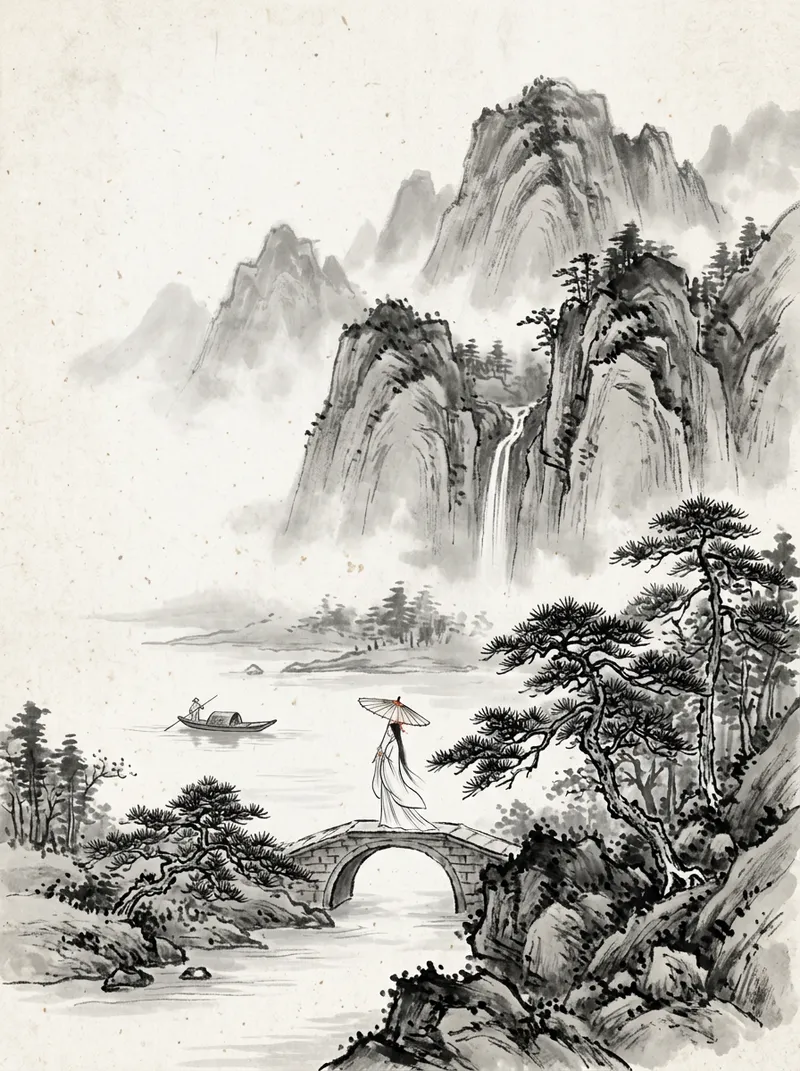
Wabi-sabi vs Chinese ink painting (shanshui)
Japanese wabi-sabi
Chinese shanshui
What it is
An aesthetic and way of living
A painting tradition
Main subject
Everyday objects, rooms, gardens, materials
Vast mountains and water seen by a scholar
Scale
Close and intimate: a bowl, a wall, a corner
Grand and distant: whole ranges and rivers
Core idea
Beauty in imperfection, age and impermanence
Harmony of people and nature, the 'three distances'
Empty space
Ma (間): pause and quiet in rooms and objects
Liubai (留白): blank paper as mist, water, sky
Colour
Earthy, faded: clay, ash, moss, rust
Ink first; pale ochre (qianjiang) or mineral blue-green (qinglu)
Roots
Zen Buddhism, the tea ceremony, Sen no Rikyū
Literati painting, Daoism, Guo Xi and Song masters
Prompt words
patina, chipped, raku, earth plaster, shoji light
ink wash, xuan paper, cun texture strokes, hanging scroll
How to
How to make wabi-sabi AI images
Choose one humble subject
A bowl, a branch, a wall, a corner of a garden. Wabi-sabi pictures rarely have more than three objects.
Describe the material and its age
Rough clay, cracked glaze, weathered wood, lichen, frayed linen. Age and wear carry the mood.
Ask for soft, low light
Side light from a paper window, overcast daylight or late afternoon shadows. Avoid bright, even studio light.
Keep the negative prompt
It stops glossy surfaces, symmetry and Japan clichés. It's included in the copy.
Leave space and accept flaws
Ask for an off-centre subject and empty space. If a result looks too perfect, regenerate rather than upscale.
Guide
A practical guide to wabi-sabi AI images
Write about time, not style
The word 'wabi-sabi' alone often produces a generic beige room. What actually creates the feeling is evidence of time: a glaze that has crazed, wood worn pale where hands touched it, a rusted iron kettle, moss creeping over a step. Put one or two of these details in every prompt.
Use a narrow, earthy palette
Clay, ash grey, moss green, rust, charcoal, undyed linen. Mentioning 'colourful' or a bright accent breaks the mood. If you want one colour, make it something natural and faded, such as a dull persimmon orange or a dried-leaf red.
Light from one side
Japanese interiors are lit through paper screens (shoji) and deep eaves, so light is soft, low and from one direction, with long shadows and dark corners. Writing 'single soft side light, deep shadows' does more than any style word.
Asymmetry and ma (間)
Ma is the Japanese idea of meaningful empty space or pause. Place the subject off-centre, leave a large plain area, and avoid matching pairs. Odd numbers of objects (one, three) feel more natural than even ones.
Avoid the postcard
Torii gates, cherry blossoms, kimono and Mount Fuji make a picture 'Japanese' but rarely wabi-sabi. Keep them in the negative prompt unless you really need them, and let ordinary things carry the mood.
Prompts
12 copy-ready wabi-sabi prompts
Text-to-image unless the prompt says to upload a photo. The negative prompt is included in the copy.
12 of 12 shown
#01
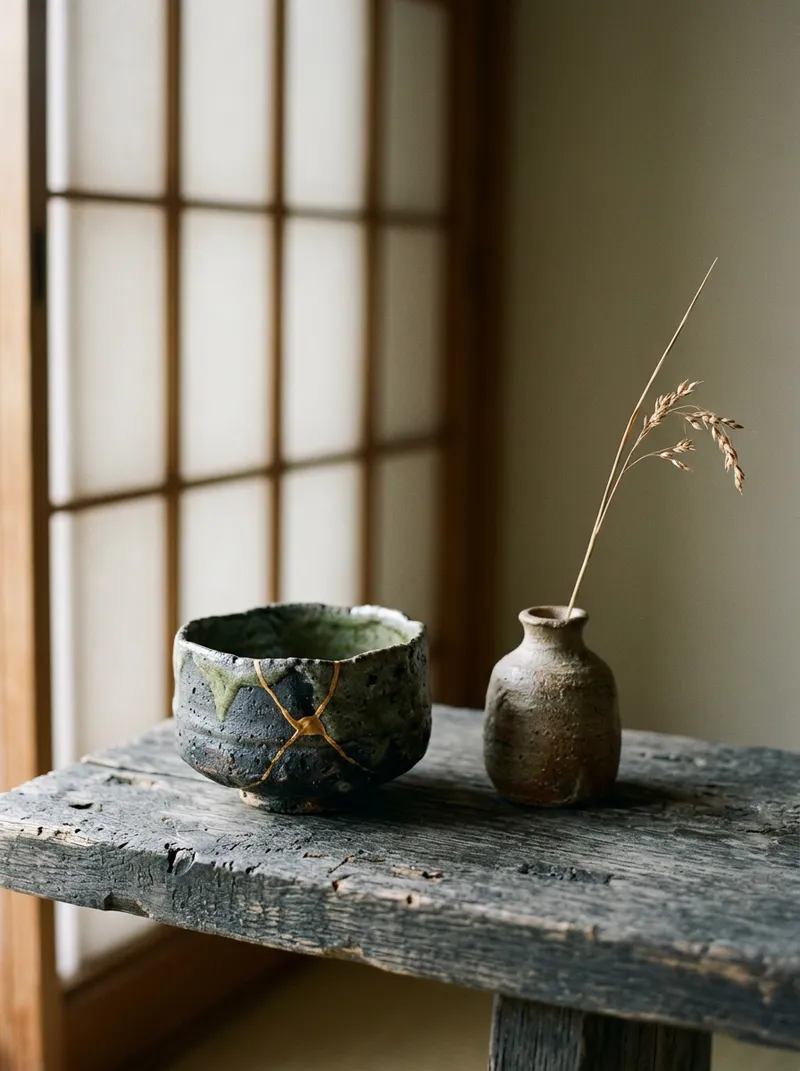
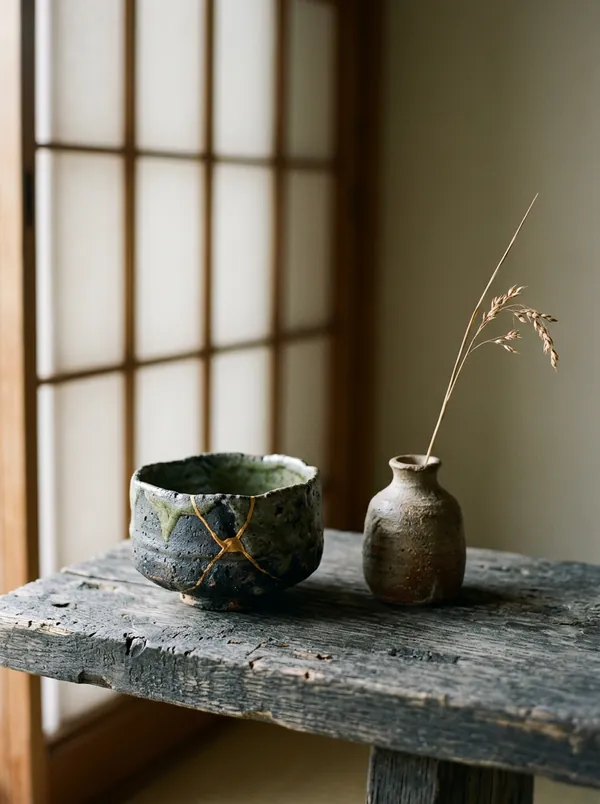
Kintsugi tea bowl
Example result, AI-generated
Best for: Pick this for a mindful-living post, a ceramics brand or a blog header about resilience; the gold crack is the story, so keep it visible and off-centre.
Still life photograph of a handmade raku tea bowl with an irregular rim and a crack repaired with gold kintsugi lacquer, sitting on a worn grey oak board, one dry grass stem in a rough stoneware vase beside it, soft side light from a paper shoji window, deep shadow on the other side, muted palette of clay, ash grey and moss, off-centre composition with lots of empty space, 35mm film grain, 3:4.

Negative prompt: glossy, polished, perfectly symmetrical, shiny plastic, chrome, neon colours, oversaturated, HDR, cluttered, busy pattern, luxury gold decor, cherry blossom cliché, geisha, samurai, anime, text, kanji, watermark, logo
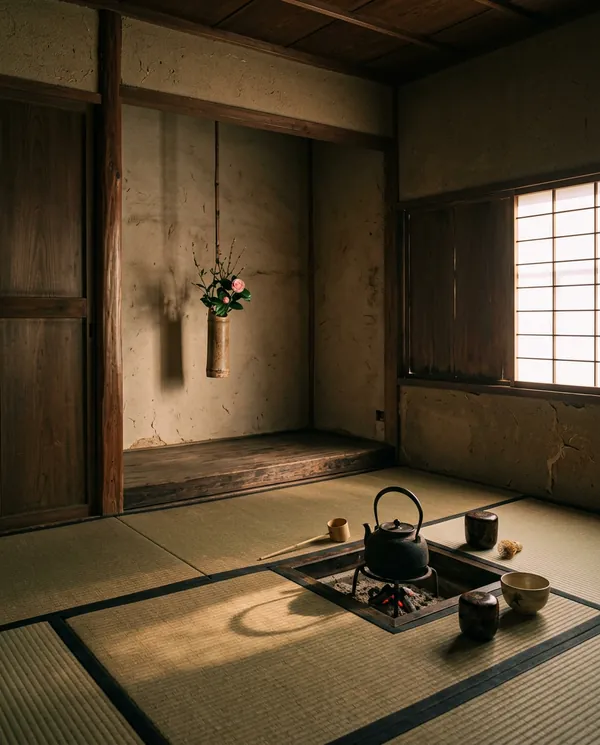
Best for: Use it for tea, matcha or slow-living content; keep the room empty, since one flower and one kettle is what makes a tea room feel calm.
Interior of a small rustic Japanese tea room (chashitsu): worn tatami, earth-plaster walls with visible straw, a tokonoma alcove holding one camellia bud in a bamboo vase, an iron kettle on a sunken hearth, late-afternoon light through a low paper window, long shadows, quiet and empty, muted earthy tones, eye level from the floor, 4:5.

Negative prompt: glossy, polished, perfectly symmetrical, shiny plastic, chrome, neon colours, oversaturated, HDR, cluttered, busy pattern, luxury gold decor, cherry blossom cliché, geisha, samurai, anime, text, kanji, watermark, logo
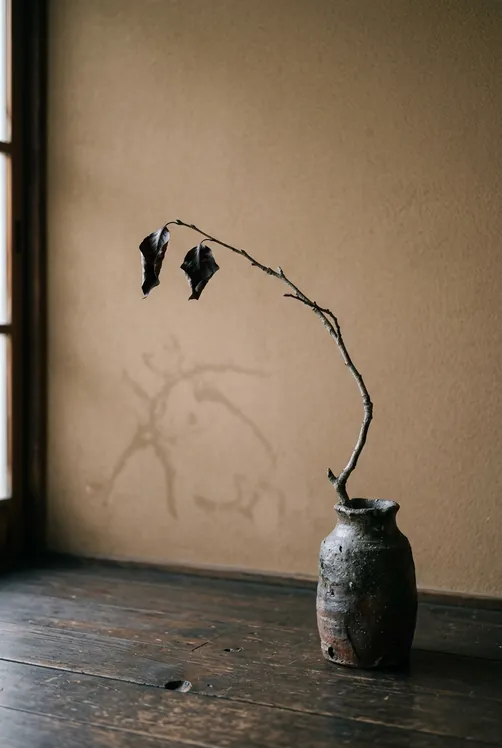
Best for: Best for florists, interior moodboards and phone wallpapers; one branch with two leaves reads better than a full arrangement.
Minimal wabi-sabi ikebana: a single crooked branch with two late autumn leaves in a rough, ash-glazed stoneware vase, placed off-centre on a dark wooden floor against a plain clay-coloured wall, soft window light from the left, the branch casting a faint shadow, lots of empty space, calm, quiet, 2:3.

Negative prompt: glossy, polished, perfectly symmetrical, shiny plastic, chrome, neon colours, oversaturated, HDR, cluttered, busy pattern, luxury gold decor, cherry blossom cliché, geisha, samurai, anime, text, kanji, watermark, logo
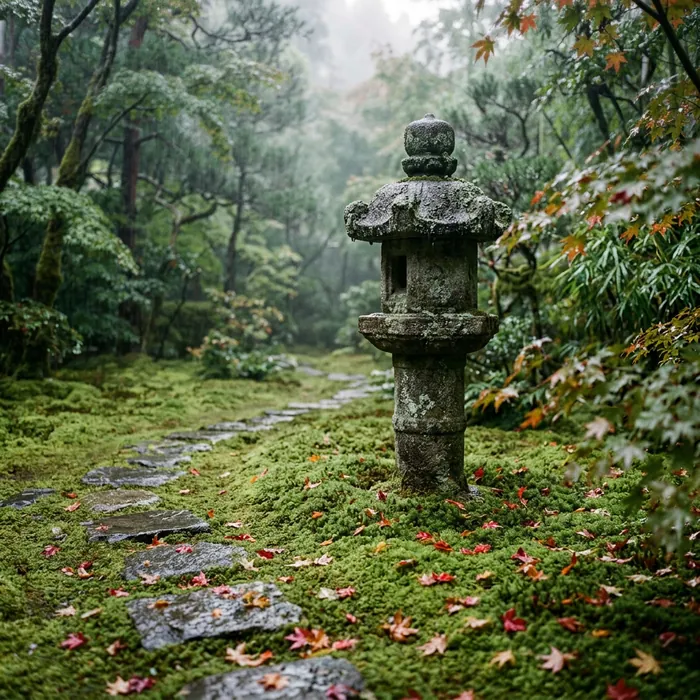
Best for: Use it for meditation apps, rainy-day posts and travel content about Kyoto temples; overcast light keeps the moss soft and avoids postcard colours.
Japanese moss garden in light rain: an old weathered stone lantern covered in lichen, a soft green moss carpet, a few fallen red maple leaves, a worn stepping-stone path disappearing into mist, overcast light, muted greens and greys, quiet and slightly melancholy, impermanence, photographic with gentle film grain, square 1:1.

Negative prompt: glossy, polished, perfectly symmetrical, shiny plastic, chrome, neon colours, oversaturated, HDR, cluttered, busy pattern, luxury gold decor, cherry blossom cliché, geisha, samurai, anime, text, kanji, watermark, logo
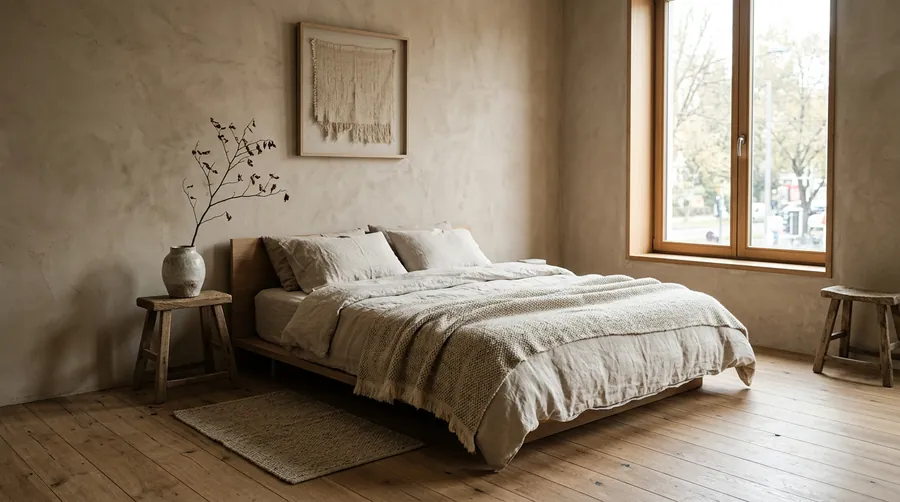
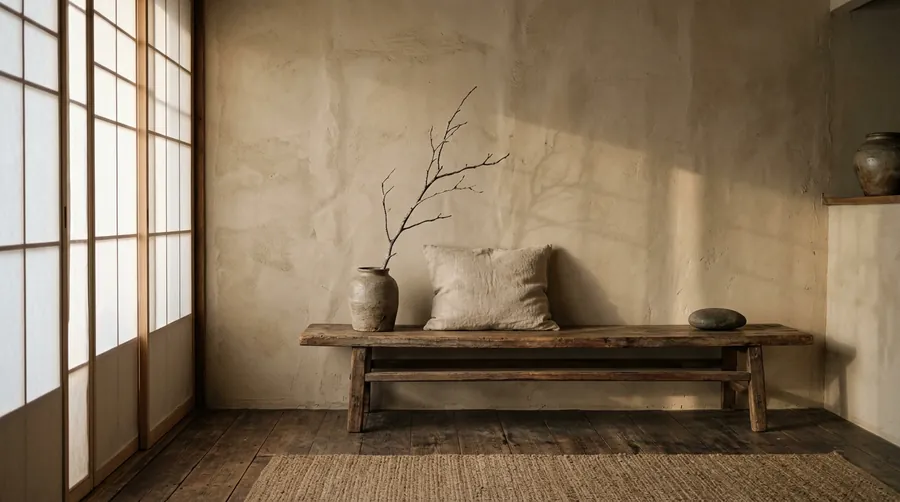
Best for: Pick this for interior design moodboards, Airbnb listing ideas and Pinterest boards searching 'wabi-sabi living room'; earth plaster walls do most of the work.
Wabi-sabi interior design photograph: a calm living room with hand-troweled earth-plaster walls in warm beige, a low aged wooden bench, linen cushions in undyed colours, a rough ceramic vase holding one bare branch, a weathered stone on the floor, soft late-afternoon light through paper screens casting long shadows, imperfect handmade textures, sparse and quiet, wide 16:9.

Negative prompt: glossy, polished, perfectly symmetrical, shiny plastic, chrome, neon colours, oversaturated, HDR, cluttered, busy pattern, luxury gold decor, cherry blossom cliché, geisha, samurai, anime, text, kanji, watermark, logo
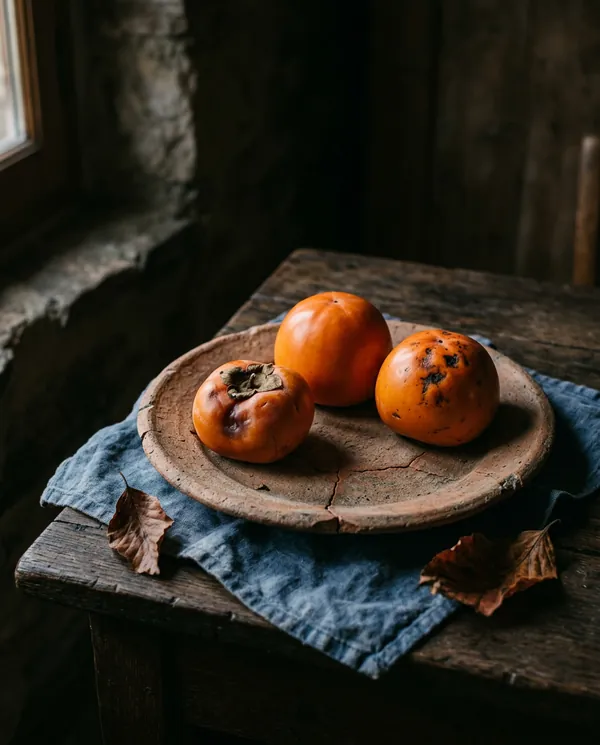
Best for: Good for autumn food posts and seasonal menus; the bruise on one fruit is deliberate, so don't remove it when the model makes everything perfect.
Wabi-sabi still life: three ripe persimmons, one slightly bruised, on a cracked, unglazed clay plate, a few dry leaves, a worn indigo linen cloth folded underneath, dark wooden table, single soft light from the side, deep shadows, faded autumn colours, quiet and simple, painterly photograph, 4:5.

Negative prompt: glossy, polished, perfectly symmetrical, shiny plastic, chrome, neon colours, oversaturated, HDR, cluttered, busy pattern, luxury gold decor, cherry blossom cliché, geisha, samurai, anime, text, kanji, watermark, logo
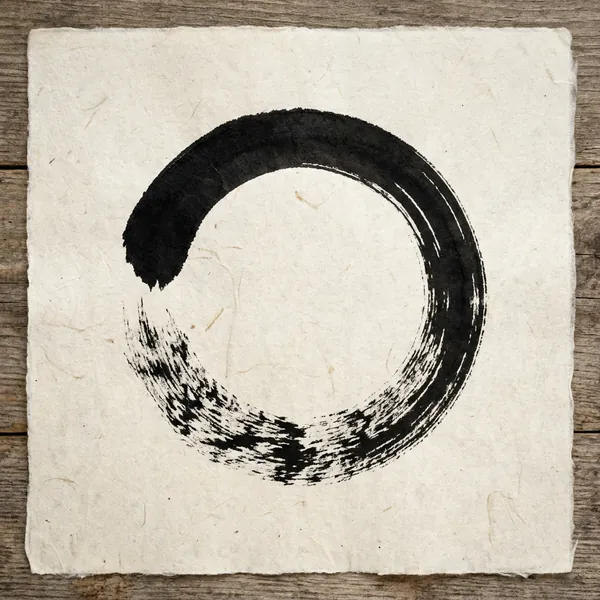
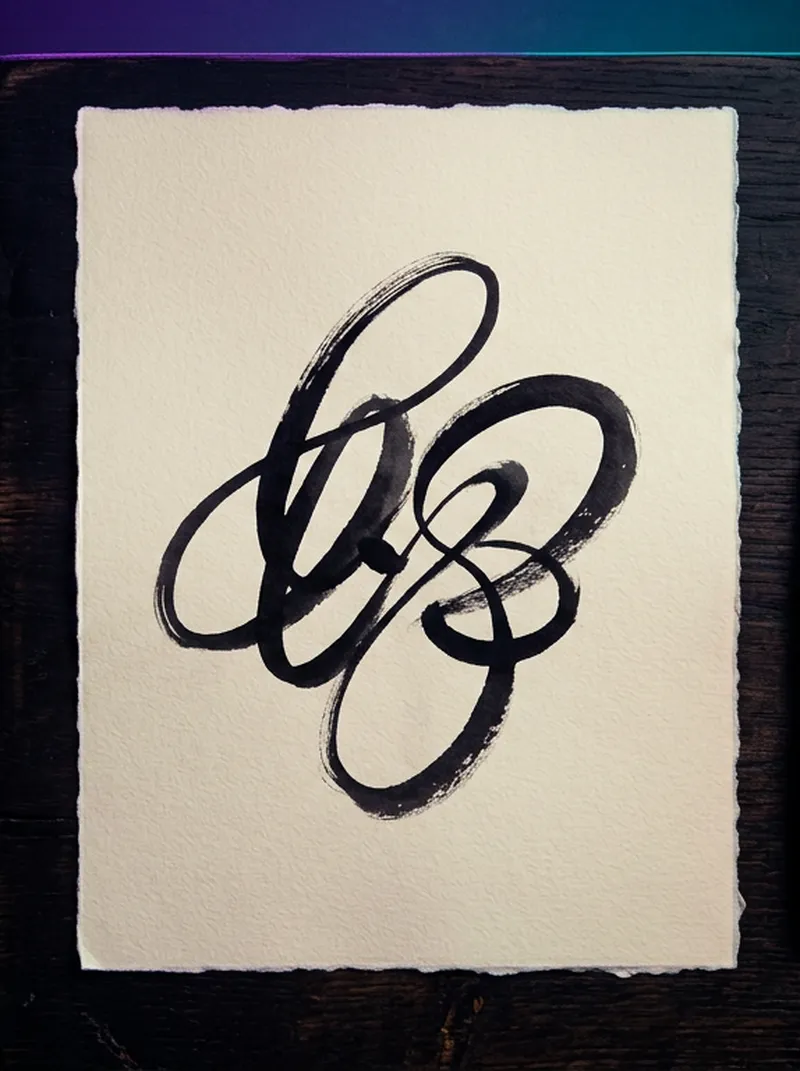
Best for: Use it for yoga studio branding, book covers and tattoo ideas; ask for the circle 'left slightly open', which is the Zen detail most results miss.
A single Zen ensō circle painted in one stroke with black sumi ink on handmade washi paper, the circle left slightly open, dry-brush texture where the ink ran out, paper fibres visible, nothing else on the page, vast empty space, calm and meditative, square 1:1.

Negative prompt: glossy, polished, perfectly symmetrical, shiny plastic, chrome, neon colours, oversaturated, HDR, cluttered, busy pattern, luxury gold decor, cherry blossom cliché, geisha, samurai, anime, text, kanji, watermark, logo
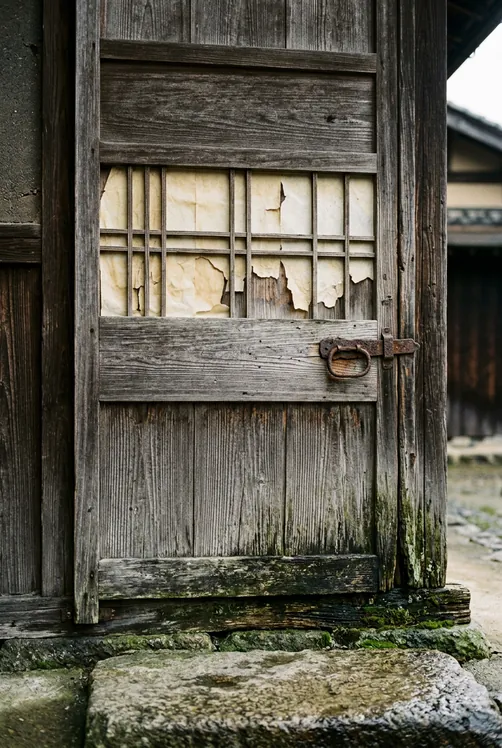
Best for: Best for texture backgrounds, architecture blogs and album art; a close crop on weathered wood shows sabi, the beauty of age, better than a wide shot.
Close-up of an old wooden sliding door on a rural Japanese farmhouse: silver-grey weathered cedar boards, peeling paper panes, a rusted iron handle, moss at the bottom edge, a stone step worn smooth, soft overcast light, texture and patina in sharp focus, muted palette, documentary photograph, 2:3.

Negative prompt: glossy, polished, perfectly symmetrical, shiny plastic, chrome, neon colours, oversaturated, HDR, cluttered, busy pattern, luxury gold decor, cherry blossom cliché, geisha, samurai, anime, text, kanji, watermark, logo
Best for: Pick this when you want to see your own room redesigned before buying anything; keep 'same camera angle' so the layout stays comparable.
Using the uploaded room photo as the reference, keep the room's layout, windows and size. Restyle it as a wabi-sabi interior: replace glossy surfaces with matte earth plaster and natural wood, use undyed linen and wool, add one handmade ceramic piece and one branch, remove clutter, warm soft daylight from the window, muted earthy palette. Realistic interior photo, same camera angle.

Negative prompt: glossy, polished, perfectly symmetrical, shiny plastic, chrome, neon colours, oversaturated, HDR, cluttered, busy pattern, luxury gold decor, cherry blossom cliché, geisha, samurai, anime, text, kanji, watermark, logo
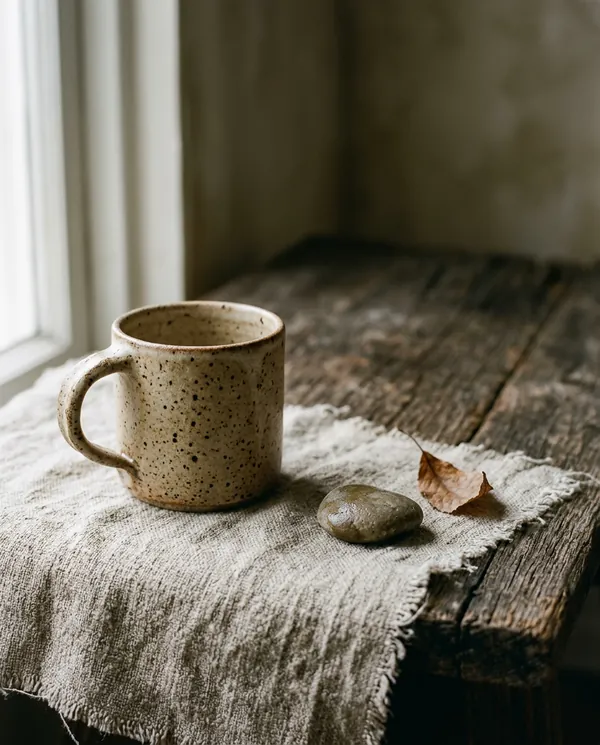
Best for: Use it for Etsy, Shopify or Instagram shop listings of handmade pottery; the empty side leaves room for a price or caption.
Using the uploaded product photo as the reference, keep the exact shape, glaze and size of the ceramic piece. Place it in a wabi-sabi product scene: a rough linen cloth, a weathered wooden board, a small river stone and a dry leaf as props, soft natural side light, gentle shadow, muted earthy background, plenty of empty space for text on one side, 4:5 for a shop listing.

Negative prompt: glossy, polished, perfectly symmetrical, shiny plastic, chrome, neon colours, oversaturated, HDR, cluttered, busy pattern, luxury gold decor, cherry blossom cliché, geisha, samurai, anime, text, kanji, watermark, logo
Best for: Good for restaurant menus, cookbook pages and dinner-party invites; mismatched dishes look intentional only if you say 'handmade' and 'mismatched'.
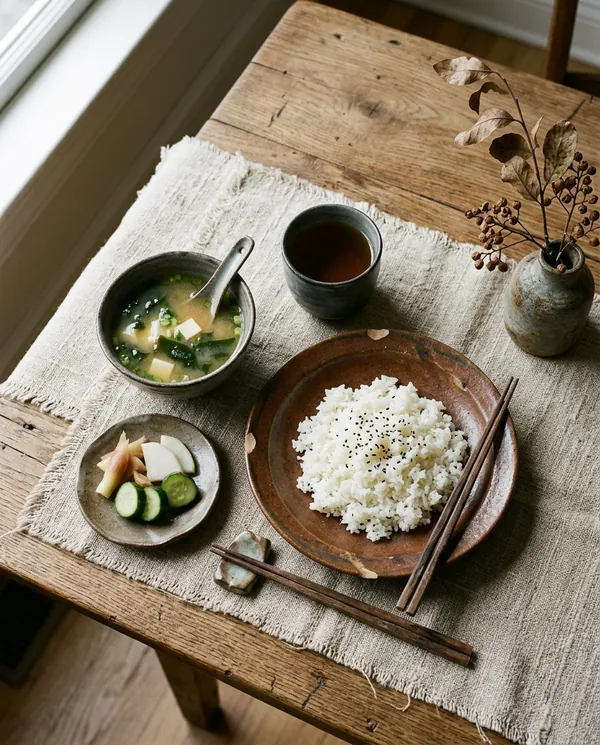
Overhead photograph of a wabi-sabi dinner table: mismatched handmade plates and bowls in ash, rust and cream glazes, one with a chipped rim, wooden chopsticks, a simple meal of rice, miso soup and pickles, a linen runner with frayed edges, a small branch of dried leaves, soft window light, natural shadows, calm, 4:5.

Negative prompt: glossy, polished, perfectly symmetrical, shiny plastic, chrome, neon colours, oversaturated, HDR, cluttered, busy pattern, luxury gold decor, cherry blossom cliché, geisha, samurai, anime, text, kanji, watermark, logo
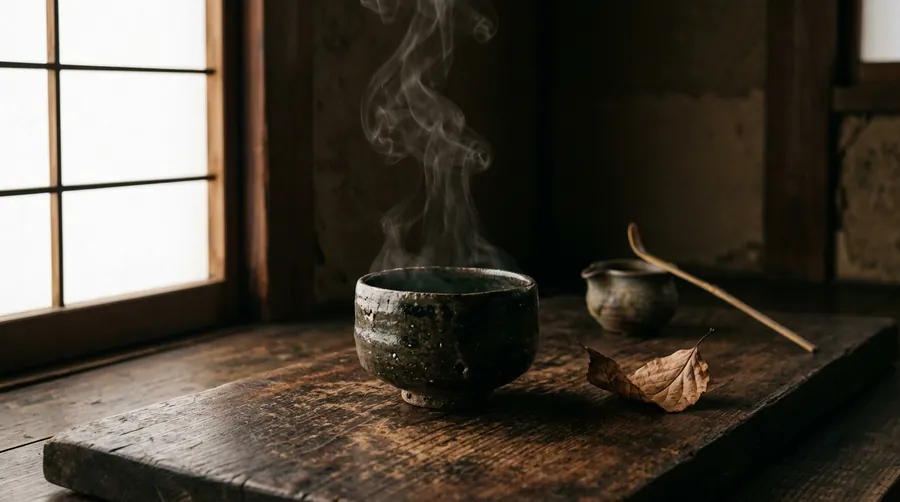
Best for: Use it to turn prompt #01 or #06 into a looping Reel or website background; very slow motion keeps the stillness that makes the image work.
Image-to-video, using the uploaded wabi-sabi still life as the first frame: keep the scene and style exactly. Thin steam rises slowly from the tea bowl, the window light shifts very slightly as if a cloud passes, a dry leaf trembles once. Extremely slow, calm motion, locked-off camera, no new objects, no text, 8 seconds.
Wabi-sabi images fail when the model tidies them up. These fixes and settings target the usual problems: too much shine, too much symmetry and too much 'Japan theme'.
Common failures and fixes
What goes wrong
How to fix it
Everything looks glossy and brand new.
Add wear words (chipped, crazed glaze, patina, faded, worn smooth) and keep 'glossy, polished, HDR' in the negative prompt.
The room turns into a beige luxury showroom.
Swap 'luxury' or 'designer' for rough materials: earth plaster, undyed linen, old wood. Remove gold decor unless it's kintsugi.
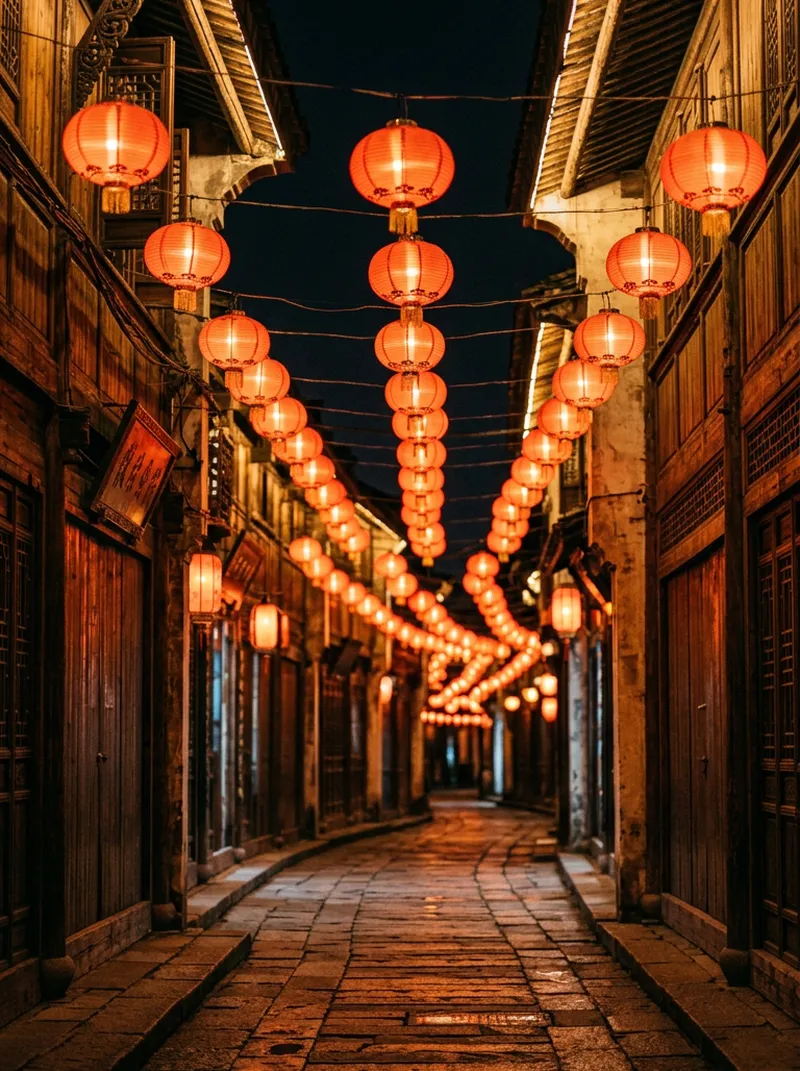
The image fills up with lanterns, fans and cherry blossoms.
Keep Japan clichés in the negative prompt and describe ordinary objects instead; wabi-sabi is about materials, not symbols.
The subject sits dead centre and looks staged.
Ask for an off-centre subject, a large plain area and an odd number of objects.
Kintsugi cracks come out as random gold paint.
Describe it as 'a single crack repaired with gold lacquer following the break line', and keep the bowl otherwise plain.
Light is bright and flat like a studio.
Write 'single soft side light from a paper window, deep shadows'; in Midjourney add --style raw.
Settings by tool
Tool
Settings that matter
How it handles this
Midjourney
Use --ar 3:4 or 4:5 for still lifes, --style raw and a low --stylize (around 50 to 100) to keep it rough; --no for clichés.
Very good at film grain and muted tone; high stylize values push it back toward glossy art.
ChatGPT
Choose portrait or landscape; upload a room or product photo and ask it to keep the layout or shape.
Follows long material lists well; ask for edits one change at a time in chat.
Gemini
Upload a photo and describe only what should change: materials, light, props.
Keeps room layouts and product shapes reasonably well when restyling.
Kling
Image-to-video from a still, 16:9, 9:16 or 1:1, 5s or 10s; use the negative prompt field and keep motion very slow.
Small motions (steam, light, a leaf) look natural; big camera moves break the calm.
Tools
Free tools that work well
Plain links for now. drawcue is independent and not affiliated with these tools.
What is the difference between wabi-sabi and minimalism?
Minimalism removes things to get a clean, perfect surface. Wabi-sabi also keeps things few, but it values roughness, wear and natural flaws. A white gloss kitchen is minimalist; an earth-plaster wall with a crack is wabi-sabi.
Is wabi-sabi the same as Chinese ink painting?
No. Both love empty space, but Chinese shanshui is a painting tradition about vast landscapes seen by a scholar, while wabi-sabi is a Japanese aesthetic of everyday objects, materials and the marks of time. The comparison table on this page shows the differences.
What is kintsugi?
Kintsugi (金継ぎ) is the Japanese craft of repairing broken pottery with lacquer mixed with gold powder, so the crack becomes a visible, beautiful line. It's often used as a symbol of wabi-sabi. Prompt #01 uses it.
Why do my images look too perfect?
Models default to polish. Add words for wear (chipped, faded, patina, uneven), use soft side light, and keep 'glossy, symmetrical, HDR' in the negative prompt. In Midjourney, --style raw helps.
Can I restyle my own room or product photo?
Yes. Upload the photo to ChatGPT or Gemini and use prompt #09 or #10. Ask it to keep the layout and only change materials, light and styling.
Is it free?
ChatGPT, Gemini and Kling offered free use or credits at the time of writing; Midjourney is paid. Limits change, so check each tool's current plan.