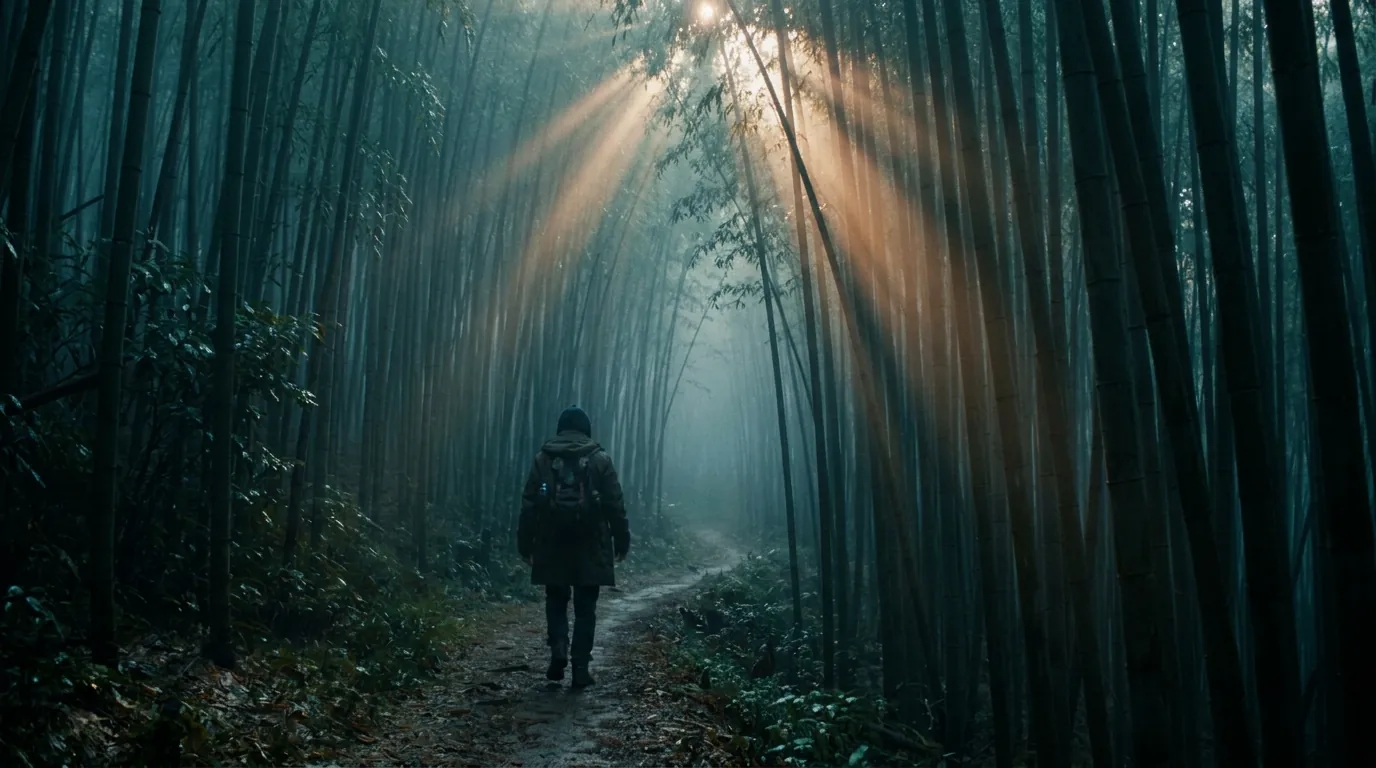
Chinese ink painting AI prompts: shuimo & guofeng made easy
Misty mountains, plum blossoms, wuxia heroes and ink-style portraits of you. Twelve tested prompts with the right brush and paper words, plus negative prompts that stop fake calligraphy.
ImageText-to-imageEN + 中文
Overview
What is Chinese ink painting (shuimo) AI art?
Chinese ink painting, called shuimo hua (水墨画) or ink-wash painting, uses black ink diluted with water on absorbent rice paper or silk. Painters build images from a few confident brushstrokes, soft grey washes and large areas of empty paper (留白, liubai). Classic subjects are landscapes of mountains and water (山水, shanshui), bamboo, plum blossom, orchids, birds, fish and scholars. 'Guofeng' (国风, national style) is the wider modern trend of Chinese-inspired art, fashion and design that often borrows this look.
Current image models can produce convincing ink-wash pictures, but only if the prompt names the medium clearly. Without words like 'ink wash on rice paper', 'dry brush', 'ink bleeding into the paper' and 'generous empty space', most models drift toward a glossy digital painting. The prompts below are written to keep the brush character, and the negative prompt blocks the fake calligraphy and red seals that models like to add.
About text and seals. Real ink paintings often carry calligraphy and red seal stamps, but AI models write meaningless pseudo-characters. Keep them in the negative prompt, and if you want a real inscription, add it yourself afterwards.
How to
How to make Chinese ink painting AI art
Pick a subject
Landscape, plant, animal, figure or your own portrait. Simpler subjects suit the style best.
Choose a tool
Jimeng and Doubao understand Chinese art terms very well; Gemini and ChatGPT follow detailed English prompts. All have free tiers.
Paste the prompt
Copy a prompt below in the language that suits the tool. For a portrait, upload your photo as a reference first.
Add the negative prompt
It blocks photo realism, oil-paint texture, fake calligraphy and seals. It is included in the copy.
Choose a tall or wide format
Hanging scrolls are tall (about 1:2 or 9:16); handscrolls are wide (16:9 or wider). Pick the ratio before generating.
Guide
A practical guide to ink-wash AI art
Name the medium, not just the style
'Chinese style' alone is too vague. Describe the materials: black ink, water, absorbent rice paper (xuan paper) or silk, a soft-hair brush. Then describe how they behave: wet ink bleeding at the edges, dry brush leaving broken lines, pale grey washes for distance. These words are what move a model from 'digital fantasy art' to something that looks painted.
Leave space on purpose
Empty paper is part of a Chinese ink composition, not a mistake. Ask for 'generous empty space', 'mist hiding the middle distance' or 'the subject placed in the lower third'. If the model fills every corner with detail, reduce the number of objects you mention; three or four elements are usually enough for one painting.
Use colour sparingly
Traditional ink paintings are mostly black and grey, sometimes with light washes of ochre or indigo, and a small accent of vermilion. If you mention 'colourful', the result becomes a poster. Mention a single colour accent instead, such as 'only the umbrella in vermilion' or 'pale green on the bamboo leaves'.
Choose a classical format
Tall hanging scrolls suit mountains, waterfalls and single figures; wide handscrolls suit rivers and journeys; small square album leaves suit flowers, birds and fish. Setting the aspect ratio to match the subject makes the composition feel right before you change a single word.
Turning a portrait into ink
For an ink-style avatar, upload a clear photo and keep the instruction short: keep the face shape and hairstyle, paint it in loose ink with light washes, plain paper background. Long scene descriptions tend to override the likeness. Afterwards you can add a real seal or inscription in an editing app if you want the traditional finish.
Prompts
12 copy-ready Chinese ink painting prompts
Text-to-image unless the prompt says to upload a photo. The negative prompt is included in the copy.
12 of 12 shown
#01
Misty mountain shanshui
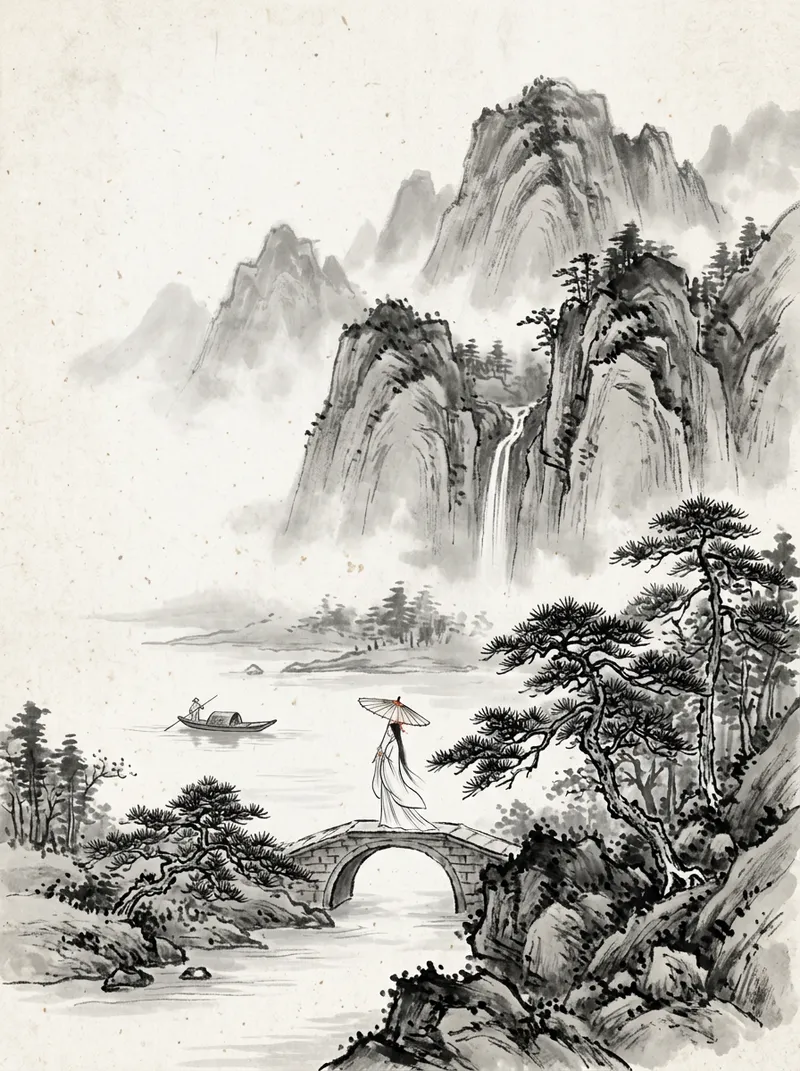
Traditional Chinese ink-wash landscape painting (shanshui) as a tall hanging scroll: layered misty mountains rising into clouds, pine trees clinging to cliffs, a thin waterfall, a tiny thatched pavilion and a lone scholar on a path, a small boat on the river below. Black ink on aged rice paper, confident dry-brush texture strokes on the rocks, soft grey washes for distance, ink bleeding naturally into the paper, generous empty space, monochrome with faint ochre. Tall 9:16 composition.

Negative prompt: photorealistic, photo, 3D render, oil paint texture, thick impasto, neon colours, oversaturated, Western watercolour style, digital gradient, text, calligraphy, characters, red seal stamp, signature, watermark, frame
Using the uploaded photo as the reference, keep the person's face shape, hairstyle and features recognisable. Paint a Chinese ink-wash portrait, head and shoulders: loose expressive black ink lines for the hair and clothing, light grey washes for shading, a touch of pale vermilion on the lips and collar, simple plain rice-paper background with lots of empty space. Soft, elegant, hand-painted look, square 1:1 avatar.

Negative prompt: photorealistic, photo, 3D render, oil paint texture, thick impasto, neon colours, oversaturated, Western watercolour style, digital gradient, text, calligraphy, characters, red seal stamp, signature, watermark, frame
Chinese ink painting of a gnarled plum branch reaching in from the left edge, sparse blossoms painted with soft pink-red dots, a small sparrow perched and looking back, a few falling petals. Dark textured ink on the old branch, wet-on-wet blossoms, plain rice paper with most of the space left empty, delicate and quiet winter mood, square album-leaf format.

Negative prompt: photorealistic, photo, 3D render, oil paint texture, thick impasto, neon colours, oversaturated, Western watercolour style, digital gradient, text, calligraphy, characters, red seal stamp, signature, watermark, frame
Classic Chinese ink bamboo painting: three slender bamboo stalks bending in the wind, sharp leaf strokes in varied ink tones from deep black to pale grey, painted with single confident brush strokes, a faint rock at the base. Plain rice paper, strong empty space, rhythm and movement, monochrome, tall 1:2 scroll.

Negative prompt: photorealistic, photo, 3D render, oil paint texture, thick impasto, neon colours, oversaturated, Western watercolour style, digital gradient, text, calligraphy, characters, red seal stamp, signature, watermark, frame
Chinese ink-wash painting viewed from above: two koi fish swimming in a circle, painted with fluid wet brushstrokes and small touches of orange-red, large lotus leaves in loose grey-green ink washes, a single lotus bud, ripples suggested by a few light lines. Rice paper texture, lots of empty water space, calm and auspicious mood, square format.

Negative prompt: photorealistic, photo, 3D render, oil paint texture, thick impasto, neon colours, oversaturated, Western watercolour style, digital gradient, text, calligraphy, characters, red seal stamp, signature, watermark, frame
Chinese ink-wash illustration in wuxia style: a lone swordsman in flowing robes standing on a cliff edge, cloak and sash whipping in the wind, sword held low, seen from behind against vast misty mountains. Bold splashed ink for the rocks, fine lines for the robe, grey washes for the clouds, a single red ribbon as the only colour, dramatic empty sky, tall 9:16.

Negative prompt: photorealistic, photo, 3D render, oil paint texture, thick impasto, neon colours, oversaturated, Western watercolour style, digital gradient, text, calligraphy, characters, red seal stamp, signature, watermark, frame
Modern city skyline painted as a traditional Chinese ink-wash landscape: skyscrapers rendered like misty mountain peaks, an elevated highway curving like a river, tiny cars as dots of ink, clouds drifting between towers. Black ink on rice paper, dry-brush textures, soft grey washes, large empty sky, contemporary guofeng mood, wide 16:9 handscroll composition.

Negative prompt: photorealistic, photo, 3D render, oil paint texture, thick impasto, neon colours, oversaturated, Western watercolour style, digital gradient, text, calligraphy, characters, red seal stamp, signature, watermark, frame
Using the uploaded pet photo as the reference, keep the animal's breed, fur markings and expression. Paint it as a Chinese ink-wash animal painting: soft wet ink for the fur, a few crisp dry strokes for whiskers and claws, sitting under a sprig of bamboo, plain rice paper with generous empty space, monochrome with a faint warm wash, square 1:1.

Negative prompt: photorealistic, photo, 3D render, oil paint texture, thick impasto, neon colours, oversaturated, Western watercolour style, digital gradient, text, calligraphy, characters, red seal stamp, signature, watermark, frame
Chinese gongbi painting on aged silk: an elegant Tang-dynasty lady in layered robes holding a round silk fan, standing beside a blooming peony, meticulous fine ink outlines, soft mineral colours of mineral green, rouge and pale gold applied in thin even layers, refined facial features, calm pose, warm beige silk background with subtle texture, tall 2:3.

Negative prompt: photorealistic, photo, 3D render, oil paint texture, thick impasto, neon colours, oversaturated, Western watercolour style, digital gradient, text, calligraphy, characters, red seal stamp, signature, watermark, frame
Chinese splashed-ink and splashed-colour landscape (pomo pocai): bold pools of black ink merging with mineral blue and green pigments to form mountains, white clouds left as bare paper, a tiny waterfall and pavilion painted in fine detail for scale. Spontaneous, abstract but recognisable, rice-paper texture, rich but harmonious colour, wide 16:9.

Negative prompt: photorealistic, photo, 3D render, oil paint texture, thick impasto, neon colours, oversaturated, Western watercolour style, digital gradient, text, calligraphy, characters, red seal stamp, signature, watermark, frame
Chinese ink painting of two red-crowned cranes, one standing on an old pine branch and one flying in, wings spread, painted with clean white space for the feathers, black ink for the neck and tail tips, a small red crown as the only colour, twisted pine needles in dark ink, rising mist, auspicious and serene, tall 9:16.

Negative prompt: photorealistic, photo, 3D render, oil paint texture, thick impasto, neon colours, oversaturated, Western watercolour style, digital gradient, text, calligraphy, characters, red seal stamp, signature, watermark, frame
Image-to-video, using the uploaded ink painting as the first frame: keep the ink-wash style exactly. Mist slowly drifts across the mountains, the small boat glides along the river, a few leaves fall, ink-like ripples spread on the water. Very slow, calm motion, static camera with a gentle push-in, no new objects, no text, 8 seconds.
Shuimo (ink-wash, xieyi) is loose and expressive, built from quick brushstrokes and washes. Gongbi is meticulous, with fine outlines and careful layers of colour. Prompt #09 is a gongbi prompt; the rest are ink-wash.
Why does the AI keep adding Chinese characters?
Because many training images of ink paintings include calligraphy and seals. The model copies the look but writes nonsense. Keep 'text, calligraphy, red seal stamp' in the negative prompt.
Why does my result look like a digital painting?
The prompt probably lacks medium words. Add 'ink wash on rice paper, visible brushstrokes, ink bleeding into the paper texture, generous empty space' and remove words like 'detailed 8k' or 'vibrant'.
Can I turn my own photo into an ink painting?
Yes. Upload your photo as a reference and use prompt #02. Tools that support reference images (Gemini, Doubao, Jimeng) keep your features while changing the medium.
Is it free?
Jimeng, Doubao, Gemini and Kling offered free daily use or credits at the time of writing. Limits change, so check each tool's current plan.
Can I sell or print the images?
That depends on the tool's terms of use and the law where you live. Check the terms of the tool you used before selling prints.